A blank journal can make five quiet minutes feel strangely demanding. The page is open, the pen is ready, and suddenly every thought seems either too small or too tangled to write down. These 365 daily journal prompts ease that pressure by giving you one clear place to begin, whether you want a quick check-in or a deeper reflection.
You can start with today’s date, pick any number, or choose the question that fits the moment. There is no need to begin on January 1, write every day, or answer the prompts in order. A journal is a tool, not an attendance sheet. Skip what does not suit you, return after a missed day without catching up, and stop after one honest sentence if that is enough.
Quick Start: 12 Daily Journal Prompts
These are prompts 1 through 12 in the full collection. Each has a reason to try it and an optional follow-up. Answering the main question alone still counts.
1. What is taking up the most room in my mind today?
Why this helps: You can begin with what already has your attention instead of searching for a more impressive subject.
Go one step deeper: Does this thought need action, acceptance, a conversation, or a place to rest?
2. Which moment from today do I want to remember?
Why this helps: A single scene is easier to capture than a complete report of your day.
Go one step deeper: Which detail would help me picture this moment a year from now?
3. How does my energy feel right now, and what might it need?
Why this helps: Your energy can give you useful information before you add another demand to the day.
Go one step deeper: What is one realistic way to support that need?
4. What is one thing I can make easier for myself?
Why this helps: Reflection becomes practical when it reduces friction in your actual day.
Go one step deeper: Can I shorten it, prepare for it, ask for help, or let it wait?
5. What am I avoiding, and what is the smallest honest reason why?
Why this helps: Naming the reason can separate a real obstacle from the pressure you are putting on yourself.
Go one step deeper: What would make the next step feel more manageable?
6. Who or what helped me recently?
Why this helps: This prompt notices support without asking you to pretend everything is going well.
Go one step deeper: How could I acknowledge, repeat, or protect that support?
7. What would “good enough” look like today?
Why this helps: A clear stopping point can be more useful than another push toward perfection.
Go one step deeper: What can I stop doing once I reach good enough?
8. What am I curious about right now?
Why this helps: Curiosity gives you somewhere to go without requiring a correct answer.
Go one step deeper: What could I observe, ask, read, or try next?
9. Which choice deserves my attention next?
Why this helps: You can focus on one decision instead of trying to untangle everything at once.
Go one step deeper: What matters most in this choice, and what matters less?
10. What do I want more of this week?
Why this helps: A short time frame turns a broad wish into something you can notice and shape.
Go one step deeper: Where could a small amount of it fit?
11. What can I set down before tomorrow?
Why this helps: An entry can hold a thought for the night so you do not have to keep rehearsing it.
Go one step deeper: Is there one part I need to remember, schedule, or tell someone?
12. What is one true sentence about my life today?
Why this helps: One plain sentence removes the pressure to explain your whole life or end with a lesson.
Go one step deeper: What feeling, need, or question sits beside that fact?
Choose a Prompt Based on What You Need
| Jump to | Purpose | Prompt numbers |
|---|---|---|
| January | Check in and begin where you are | 1-31 |
| February | Think about connection and communication | 32-59 |
| March | Notice habits, preferences, and patterns | 60-90 |
| April | Make, imagine, and follow your curiosity | 91-120 |
| May | Review work, rest, and daily balance | 121-151 |
| June | Meet change with a manageable next step | 152-181 |
| July | Notice pleasure, play, and ordinary life | 182-212 |
| August | Turn intentions into practical plans | 213-243 |
| September | Learn from experience and stay curious | 244-273 |
| October | Protect your time and release what no longer fits | 274-304 |
| November | Notice support and express appreciation | 305-334 |
| December | Review the year and look ahead | 335-365 |
365 Daily Journal Prompts for Every Day of the Year
The prompts are numbered continuously, but the months are only a helpful structure. Begin anywhere. The themes do not depend on a particular season, holiday, family setup, belief, job, or relationship status.
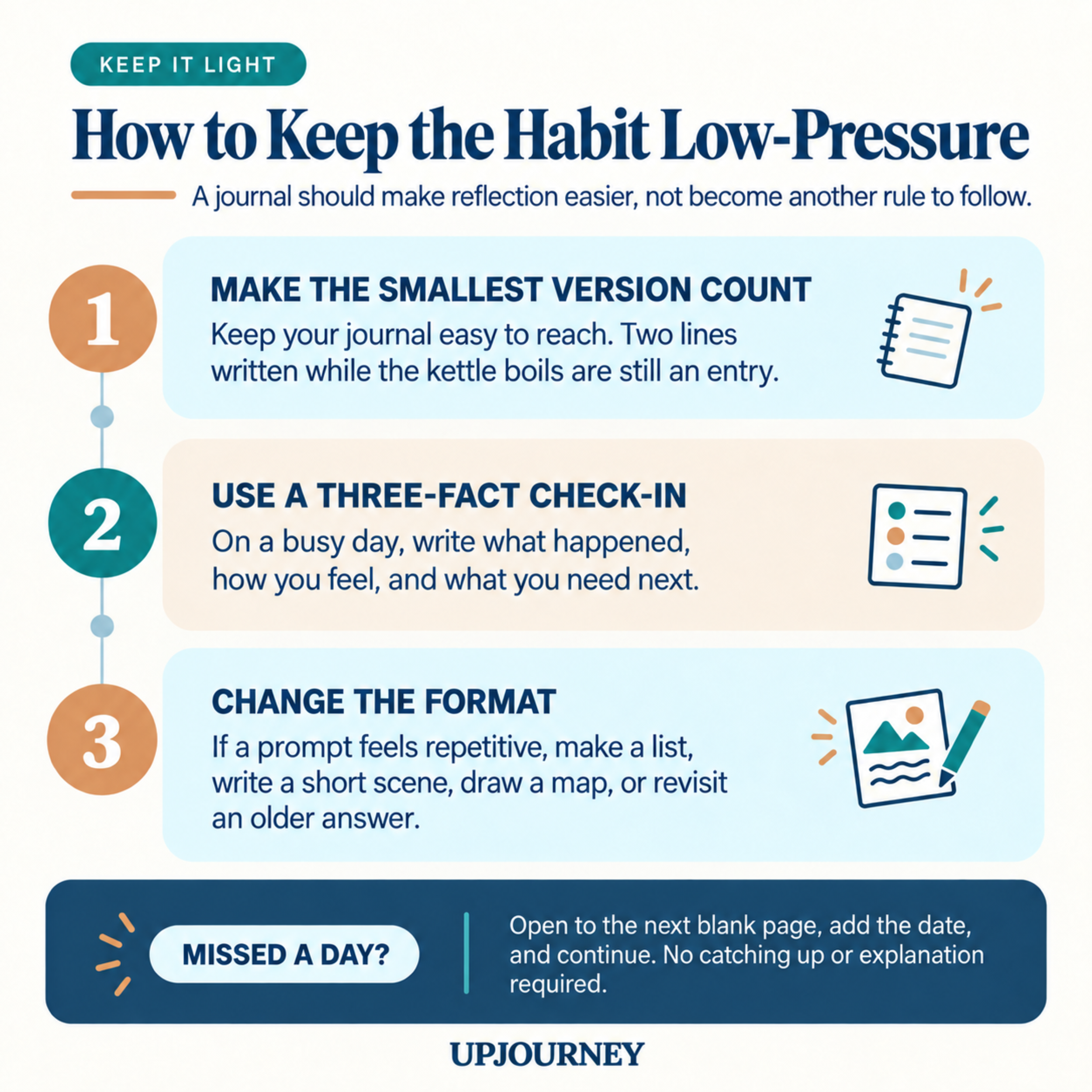
If you miss a day, continue with the next prompt you want to answer. There is no backlog. You can also reuse a favorite question and see what has changed since the last time you answered it.
January: Starting Where You Are
As the year starts, these prompts offer a clear place to pause and take stock. They help you name what is occupying your mind, notice what already feels steady, and begin with awareness rather than pressure to reinvent yourself.
- What is taking up the most room in my mind today?
- Which moment from today do I want to remember?
- How does my energy feel right now, and what might it need?
- What is one thing I can make easier for myself?
- What am I avoiding, and what is the smallest honest reason why?
- Who or what helped me recently?
- What would “good enough” look like today?
- What am I curious about right now?
- Which choice deserves my attention next?
- What do I want more of this week?
- What can I set down before tomorrow?
- What is one true sentence about my life today?
- Which part of my day felt most like mine?
- Where did my attention keep going, and what might that tell me?
- What feels clear right now?
- Which question can remain unanswered for a while?
- What is one small task that would give me useful relief?
- How have I been speaking to myself today?
- What deserves more patience than I have been giving it?
- Which expectation am I carrying without examining it?
- What feels steady even while other things change?
- When did I feel most present today?
- What have I noticed but not yet named?
- Which part of my routine supports me well?
- Where could I leave a little more space in my day?
- What is asking for a simple yes-or-no?
- How would I describe today without judging it?
- What is one thing I understand better than I did last month?
- Which unfinished matter can wait without harm?
- What do I want to remember when tomorrow begins?
- Looking back at these entries, what keeps appearing?
February: Relationships and Connection
With the year underway, February turns your attention toward the people and exchanges that shape daily life. These prompts help you notice where connection feels mutual, what makes communication honest, and which forms of support are worth tending.
- When do I feel most at ease with another person?
- What helps me feel heard in a conversation?
- How do I usually show someone that I care?
- Which kind of support is easiest for me to receive?
- What makes an apology feel sincere to me?
- Who gives me room to be honest?
- What do I appreciate about a connection in my life?
- Where would clearer communication help?
- How can I listen without planning my reply?
- Which relationship leaves me feeling restored?
- What do I need before discussing something difficult?
- How do I prefer to handle disagreement?
- What assumption about someone might be worth checking?
- Which conversation am I glad I had?
- What do I wish others understood about how I receive care?
- Where am I giving more than I can comfortably offer?
- How can I express appreciation in a way that feels natural?
- What makes me trust another person?
- Which boundary helps a relationship stay respectful?
- When have I changed my mind because someone listened well?
- What kind of company suits me today?
- How do I know when I need time alone?
- Who could I contact without needing a perfect reason?
- What would I like to ask instead of assuming?
- Which shared memory still makes me smile?
- How can I make one conversation less rushed?
- What does mutual effort look like to me?
- Which connection would I like to tend more carefully?
Choose the closest feeling and we will pick a prompt for it.
Private: your choices stay on this device.What would help most?
March: Self-Knowledge and Patterns
By March, familiar routines may be revealing more about how you move through the day. These questions help you spot the habits, reactions, and preferences behind your choices before deciding what deserves to change.
- What brings out a quieter version of me?
- Which situations make me rush?
- How do I behave when I feel confident?
- What do I often postpone until I feel “ready”?
- Which compliment is hard for me to accept?
- What kind of problem do I enjoy solving?
- When do I lose track of time in a good way?
- What usually helps me recover after a demanding day?
- Which rule for myself have I never questioned?
- How do I know when I am overwhelmed?
- What do I tend to notice before other people do?
- Which choice do I make differently when I am tired?
- What am I better at than I admit?
- When does comparison change my behavior?
- What helps me feel prepared?
- Which ordinary situation makes me uncomfortable, and why?
- How do I react when a plan changes suddenly?
- What do I protect when I am under pressure?
- Which habit began for a good reason but may need updating?
- What kind of praise feels meaningful to me?
- When am I most likely to ignore my own preference?
- What does my spending of time say about my priorities?
- Which emotion do I recognize quickly?
- What feeling takes me longer to name?
- How do I act when I need reassurance?
- Which environment helps me think clearly?
- What do I do differently when no one is watching?
- When have I surprised myself recently?
- Which part of my personality needs more room?
- What pattern would I like to observe without fixing it yet?
- What have I learned about myself this month?
April: Creativity and Curiosity
April opens the door to curiosity, giving you permission to try an idea before you know where it will lead. These prompts make room for imagination, experimentation, and the pleasure of creating without the need for a perfect result.
- What would I make if usefulness did not matter?
- Which color matches my mood today, and why?
- How could I describe an ordinary object without naming it?
- What subject makes me want to ask better questions?
- Which idea have I dismissed too quickly?
- What would a playful version of this task look like?
- Where do I find beauty in an unremarkable place?
- What could I try badly on purpose?
- Which sound belongs in a scene from today?
- If my week had a title, what would it be?
- What have I wanted to learn how to make?
- Which familiar route could I take with fresh attention?
- How would I solve a current problem with half the usual tools?
- What detail would I photograph if I had a camera in hand?
- Which childhood interest would be fun to revisit?
- What is one unusual use for something near me?
- How would I describe today as a weather report?
- Which question has no practical value but delights me?
- What would I create for an audience of one?
- How could I add surprise to a routine moment?
- Which unfinished idea still has energy?
- What would happen next in a story set where I am now?
- How can I make more room for experimentation?
- Which constraint could sharpen an idea instead of blocking it?
- What do I enjoy arranging, combining, or improving?
- How would a curious person approach my next hour?
- Which mistake led me somewhere interesting?
- What do I want to notice with all five senses today?
- If I could ask an expert one question, what would I ask?
- What did curiosity give me this month?
May: Work, Rest, and Everyday Balance
As the year gathers pace, May is a useful moment to check how your effort and energy are being spent. These questions help you rethink work, rest, and small adjustments that can make daily life more sustainable.
- Which task is using more energy than it deserves?
- What does useful rest look like for me today?
- When does my day feel too crowded?
- Which responsibility matters most this week?
- What can be done adequately instead of perfectly?
- How do I know when I need a real break?
- Which part of my routine creates unnecessary friction?
- What work am I proud to have completed?
- Where could I ask for clearer expectations?
- What helps me shift out of work mode?
- Which commitment no longer fits my available time?
- How would I spend an hour with no productive purpose?
- What makes a task feel worth the effort?
- Which interruption can I prevent or reduce?
- What am I trying to finish before I allow myself to rest?
- How could I make tomorrow morning easier tonight?
- Which part of my day would benefit from a slower pace?
- What does enough look like for this week?
- When do I do my clearest thinking?
- What could I remove from my to-do list without regret?
- Which small chore would improve my surroundings?
- How do I want my free time to feel?
- What am I doing from habit rather than necessity?
- Which request deserves a more honest answer?
- What kind of rest leaves me genuinely refreshed?
- How can I make one repeated task simpler?
- Which accomplishment have I rushed past without noticing?
- What would a balanced day include and leave out?
- Where do I need a clearer stopping time?
- What is one practical kindness I can do for my future self?
- What adjustment would make next month more workable?
June: Courage and Change
At the midpoint of the year, change can feel clearer, closer, or simply harder to ignore. These prompts help you find your footing, name what is uncertain, and choose a brave but manageable next step.
- Which change am I still getting used to?
- What feels uncertain but worth exploring?
- When have I acted before I felt fully ready?
- What would a ten-percent braver choice look like?
- Which fear contains useful information?
- How can I prepare without trying to control every outcome?
- What am I willing to learn as I go?
- Which old plan needs a new version?
- Where would a small experiment be safer than a big decision?
- What helps me stay grounded during change?
- Which possibility feels both exciting and uncomfortable?
- How have I adapted better than I expected?
- What can remain familiar while something else changes?
- Which conversation requires a little courage?
- What would I attempt if embarrassment were temporary?
- How could I make an unfamiliar step more approachable?
- Which risk is not mine to take?
- What is the difference between discomfort and a warning here?
- When has asking a question made me braver?
- What would I do if I trusted my ability to adjust?
- Which decision can be revised later?
- How do I want to treat myself while I learn?
- What am I ready to try once?
- Which part of change deserves to be acknowledged as a loss?
- What new option appeared when the old one closed?
- How can I support myself before taking the next step?
- Which piece of advice fits my situation, and which does not?
- What evidence do I have that I can handle uncertainty?
- Where have I mistaken caution for failure?
- What did I learn about courage this month?
July: Joy, Play, and Ordinary Moments
With half the year behind you, July creates room to notice what makes ordinary life feel lighter. These questions draw your attention to pleasure, play, comfort, and the kinds of enjoyment that do not need to be earned.
- What made me laugh recently?
- Which small pleasure would I like to repeat?
- What did I enjoy before I cared whether I was good at it?
- How can I make ten minutes feel like a break?
- Which ordinary sound do I find comforting?
- What food, drink, or scent feels familiar in a good way?
- When did I last do something for the fun of it?
- What is delightfully unnecessary in my life?
- Which game or playful activity would I try today?
- How could I make a routine errand more pleasant?
- What did I notice today that I usually miss?
- Which song changes the mood of a room for me?
- What would my ideal unhurried hour contain?
- How do I like to celebrate small occasions?
- Which harmless preference do I feel strongly about?
- What is funny only because I know the full story?
- Where could I choose ease for its own sake?
- What object nearby has an interesting history?
- Which simple plan gives me something to look forward to?
- How would I describe a favorite place using only sensory details?
- What is one thing I enjoy sharing with others?
- Which part of today felt lighter than expected?
- What would a no-cost treat look like?
- How can I give my attention to something pleasant without earning it first?
- Which recent inconvenience might become a good story later?
- What do I want to do slowly next time?
- When did I feel pleasantly absorbed?
- Which everyday luxury do I appreciate?
- What playful question would I ask someone I know well?
- How could I make my space more enjoyable for an hour?
- What kind of joy felt most available this month?
August: Goals and Practical Plans
August turns broad intentions into something you can actually work with. These prompts help you clarify what matters now, shape realistic plans, and define progress that leaves room for rest and revision.
- Which goal matters to me now, not to an earlier version of me?
- What would progress look like by the end of this week?
- Which next step is small enough to schedule?
- What am I hoping this goal will change?
- How will I know when this task is complete?
- Which resource do I already have?
- What information do I need before deciding?
- Who could answer one useful question about this plan?
- Which obstacle can I plan around?
- What part of this goal is within my control?
- How could I make the first step more visible?
- Which deadline is real, and which one did I invent?
- What am I willing to do consistently for ten minutes?
- How can I reduce the number of decisions this plan requires?
- Which goal can I pause to protect a more important one?
- What result would be helpful even if it is not ideal?
- How could I track progress without turning it into pressure?
- Which task belongs on a calendar instead of a wish list?
- What would make this plan easier to restart after a break?
- How can I divide this project into a beginning, middle, and end?
- Which part can I test before committing fully?
- What might I need to say no to while I work on this?
- How will I make room for rest in the plan?
- Which past success offers a useful clue?
- What am I assuming will be harder than it may be?
- How could I reward effort without depending on the outcome?
- Which goal needs a clearer reason?
- What would I advise someone else to do first?
- How can I make tomorrow’s step obvious?
- Which unfinished goal can I let go of without calling it a failure?
- What did steady progress look like this month?
September: Learning and Growth
September brings a natural opportunity to reflect on what experience has been teaching you. These questions help you recognize progress, stay curious about what you do not yet know, and treat growth as practice rather than perfection.
- What am I interested in understanding better?
- Which recent mistake taught me something useful?
- How do I respond when I do not know the answer?
- What skill would make daily life easier?
- Which belief have I updated after learning more?
- When do I feel most open to feedback?
- What question could help me learn from someone different from me?
- Which subject can hold my attention for hours?
- How do I prefer to practice a new skill?
- What have I learned by watching rather than doing?
- Which lesson took me more than once to understand?
- What would I like to read about next?
- How can I make room for beginner-level effort?
- Which piece of feedback still feels useful?
- What do I understand now that once confused me?
- How have I learned to solve a recurring problem?
- Which experience changed my perspective?
- What could I teach clearly to someone else?
- How do I separate being wrong from being incapable?
- Which source of information has earned my trust, and why?
- What assumption would I like to investigate?
- How can I practice curiosity during disagreement?
- Which question became more interesting after I answered it?
- What does improvement feel like before it becomes visible?
- How have my standards changed with experience?
- Which ability have I built through repetition?
- What do I want to learn directly from trying?
- How can I record what this experience is teaching me?
- Which gap in my knowledge is fine to leave open?
- What kind of growth mattered most this month?
October: Boundaries and Letting Go
As the year moves toward its final stretch, October asks what still belongs in your life and what may be ready to loosen. These prompts help you protect your time, honor your limits, and make space by releasing what no longer fits.
- Where do I need more room to think?
- Which request can I answer after checking my capacity?
- What am I responsible for in this situation?
- What belongs to someone else to decide or carry?
- Which limit would protect my time this week?
- How can I say no without writing a long defense?
- What am I keeping only because it once mattered?
- Which obligation needs to be renegotiated?
- What do I want to stop explaining?
- How do I recognize when a conversation should pause?
- Which notification, object, or task creates avoidable noise?
- What would I like to leave unfinished on purpose?
- Where could privacy help me feel safer or freer?
- Which expectation can I return to its owner?
- What is the cost of saying yes here?
- How would I protect one hour for what matters?
- Which old opinion about myself no longer fits?
- What am I ready to forgive myself for not completing?
- How can I leave a situation without it turning into a verdict against me?
- Which recurring demand needs a standard response?
- What deserves distance before I make a decision?
- How do I want others to handle my personal information?
- Which possession could I donate, store, repair, or discard?
- What would become easier with a clearer limit?
- When have I felt relieved after changing my mind?
- Which goal am I allowed to outgrow?
- What can I accept without approving of it?
- How could I end the day without carrying every loose end?
- Which boundary needs action rather than more explanation?
- What am I making space for by letting this go?
- What did I protect or release well this month?
November: Gratitude and Appreciation
Near the close of the year, November shifts attention toward the support and small comforts that are easy to overlook. These questions encourage specific, honest appreciation that can exist alongside an imperfect day.
- What helped today go a little better?
- Which ordinary object made my day easier?
- Who taught me something I still use?
- What part of my surroundings do I appreciate right now?
- Which recent effort deserves acknowledgment?
- What am I thankful I did not have to do alone?
- How has someone shown care in a way I remember?
- Which ability in my body or mind supported me today?
- What convenience do I usually take for granted?
- Which past decision am I glad I made?
- What small comfort was available to me?
- How can I thank someone specifically?
- Which place has made me feel welcome?
- What did I receive that cannot be bought?
- Which part of my routine quietly supports me?
- What am I glad to know now?
- How did I help myself through something difficult?
- Which familiar sound, sight, taste, scent, or texture do I value?
- What opportunity am I pleased I accepted?
- Who makes an ordinary moment more enjoyable?
- Which mistake am I grateful I was allowed to correct?
- What did someone remember about me that mattered?
- How can I show appreciation without making it elaborate?
- Which useful thing worked as expected today?
- What freedom or choice do I value?
- Which part of my past self deserves thanks?
- What did I enjoy even though the day was imperfect?
- How has my life become easier in one small way?
- Which source of support would I like to notice more often?
- What form of appreciation felt most honest this month?
December: Review and Renewal
As the year ends, December offers space to look back without forcing every experience into a neat lesson. These prompts help you honor accomplishments, acknowledge disappointments and unfinished work, and carry forward what still matters.
- Which three moments best represent this year for me?
- What changed in my daily life?
- Which challenge did I meet in a way I respect?
- What surprised me about the past twelve months?
- Which choice shaped the year more than I expected?
- What did I begin?
- What did I finish?
- Which unfinished matter still deserves a place next year?
- What am I comfortable leaving behind?
- How did my priorities move or sharpen?
- Which relationship or connection influenced my year?
- What did I learn about my limits?
- Where did I become more flexible?
- Which ordinary day do I remember clearly?
- What brought me back to myself?
- Which risk was worth taking?
- What did I stop doing, and what changed afterward?
- How did I use my time differently?
- Which achievement matters even if nobody else noticed it?
- What would I like to thank myself for?
- Which disappointment needs an honest sentence, not a silver lining?
- What do I want to carry forward?
- Which word describes the year without simplifying it too much?
- What would I like to do more gently next year?
- Which intention could guide the next month?
- What support would make that intention more realistic?
- How do I want my days to feel, not only look?
- Which first step can wait until I have rested?
- What question do I want to keep asking?
- How will I make room for a surprise next year?
- What is one true sentence I want to begin the next page with?
How to Keep the Habit Low-Pressure
Frequently Asked Questions
What should I write in a daily journal?
Write about what happened, what has your attention, how you feel, what you need, a choice you are making, or a detail you want to remember. If none of those feels right, describe what you can see, hear, or feel around you. A concrete observation is enough to begin.
How do I start my first daily journal entry?
Add the date, copy one prompt, and answer it in one honest sentence. You do not need to introduce yourself or explain why you started journaling. If the first page feels too important, begin on the second page and leave the first blank.
How long should I journal each day?
Start with five minutes or three sentences. A short limit makes the habit easier to begin and return to. Write longer when the words are useful, but do not treat a full page as the minimum for a worthwhile entry.
Is it better to journal on paper or digitally?
Paper may suit you if you want fewer notifications and enjoy writing by hand. A digital journal may work better if you value speed, search, portability, or password protection. Choose the format you can keep private and use with the least friction.
Can journaling replace therapy?
No. A journal can help you record and organize your thoughts, but it cannot diagnose a problem, provide treatment, or respond like a trained professional. Use it as a personal writing tool, not as a substitute for therapy when you want or need that kind of support.