Most bullet journal pages earn their space by solving a small, recurring problem: forgotten dates, scattered tasks, money you meant to track, or memories you do not want to lose. The best setup is rarely the one with the most spreads. It is the one you can understand at a glance and update without turning planning into another project.
This guide narrows the options to 32 of the most useful and common bullet journal ideas. Each one includes a simple layout and a practical way to use it, so you can copy the structure, adjust it to your life, and skip the pages you do not need.
If you are new, start with the first four. If you already have a working system, go straight to the section that matches your needs now.
Find an Idea Based on What You Need
| Start with… | If you want to… | Idea numbers |
|---|---|---|
| Beginner pages | Build a simple first setup | 1–4 |
| Planning and productivity | Plan work without crowding every day | 5–8 |
| Habits and well-being | Notice routines and energy | 9–12 |
| Money and home | Organize money and home life | 13–16 |
| Work and school | Manage work or school | 17–20 |
| Creativity and hobbies | Make room for interests and ideas | 21–24 |
| Memories and reflection | Record your life and reflect | 25–28 |
| Travel, events, and seasons | Plan trips, events, and seasons | 29–32 |
Choose the closest feeling and we will pick a prompt for it. This finder stays inside the article.
Private: your choices stay on this device.What would help most?
32 Bullet Journal Ideas to Try
Simple Bullet Journal Ideas for Beginners
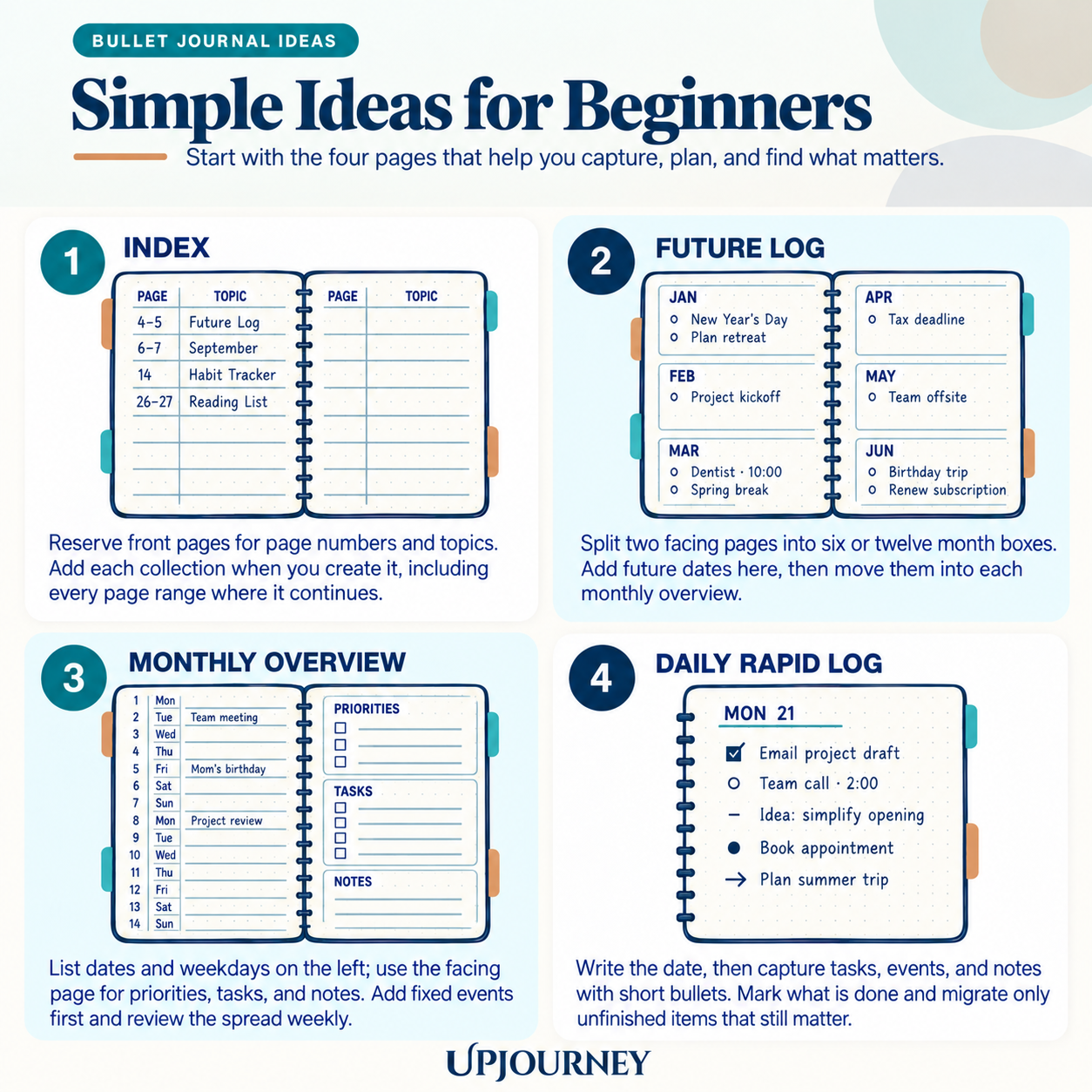
These four pages are enough to run a complete bullet journal. Set them up first, then add specialized collections only when you know what job they need to do.
1. Index
- How it looks: Reserve two or three pages at the front with narrow columns for the page number and topic. You do not need to list every daily entry; include only collections and dates you expect to find again.
- How to use it: Number pages as you go, then add a collection to the index the moment you create it. If a topic continues later in the notebook, list both page ranges on the same line.
2. Future log
- How it looks: Divide two facing pages into six or twelve labeled month boxes. Leave enough room in each box for short entries rather than drawing a full calendar.
- How to use it: Put future appointments, deadlines, trips, renewals, and reminders here when they fall outside the current month. During monthly planning, scan the relevant box and move its entries onto your monthly overview.
3. Monthly overview
- How it looks: Write the dates and days of the week down the left side of one page, then use the facing page for priorities and tasks. A small notes area can hold items that are important but not date-specific.
- How to use it: Add fixed events first, then choose a short list of outcomes for the month. Review the spread each week so the calendar and task list remain connected.
4. Daily rapid log
- How it looks: Start with the date, then write brief task, event, and note entries beneath it using simple bullets or symbols. Let each day take only the space it needs instead of dividing the page in advance.
- How to use it: Capture information as it appears, mark completed tasks, and migrate only the unfinished items that still matter. This is the working page you return to throughout the day.
Bullet Journal Ideas for Planning and Productivity
Use these spreads when a regular to-do list shows what needs doing but not what deserves attention or how a larger project moves forward.
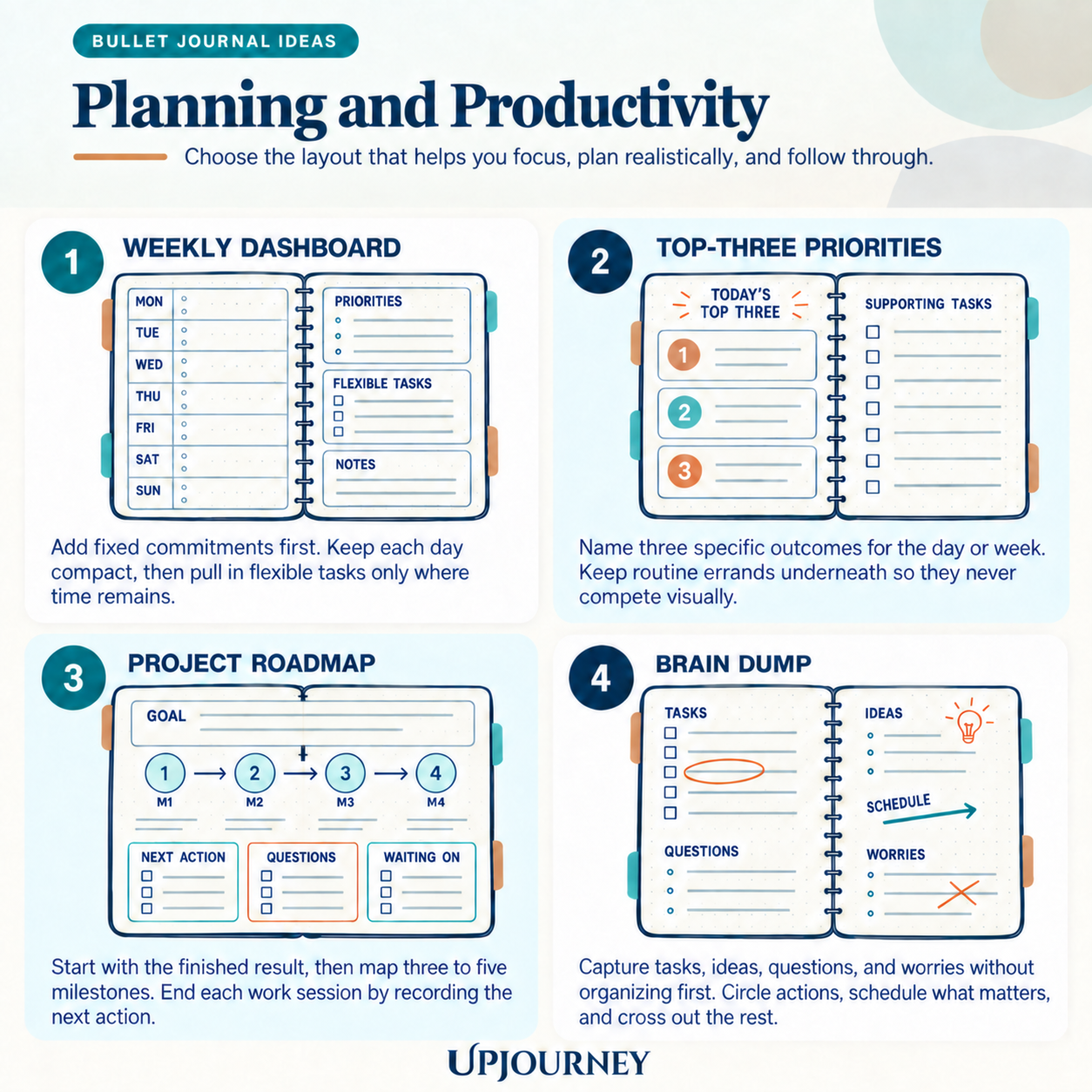
5. Weekly dashboard
- How it looks: Give each day a small box or horizontal row, then reserve one larger area for the week’s priorities, flexible tasks, and notes. Keep the daily spaces intentionally compact so they hold appointments and must-do items rather than every possible task.
- How to use it: Fill fixed commitments first, choose a few weekly outcomes, and pull tasks into a day only when you realistically have room.
6. Top-three priorities
- How it looks: Place three prominent lines or boxes at the top of a daily or weekly page, with a smaller supporting-task list underneath. The visual hierarchy should make the three outcomes impossible to confuse with routine errands.
- How to use it: Choose results, not vague categories, and finish or deliberately reschedule them before promoting new work. Use the lower list for tasks that matter but do not define a successful day or week.
7. Project roadmap
- How it looks: Put the desired outcome at the top, then arrange three to five milestones in order. Add small sections for the next action, open questions, and anything you are waiting for.
- How to use it: Update the next action whenever you finish a work session, and review the milestones during weekly planning. The page should tell you how to restart the project without rereading all your notes.
8. Brain dump
- How it looks: Use an open page with plenty of room and, if helpful, four loose zones such as tasks, ideas, questions, and worries. Avoid building a detailed grid before you know what you need to capture.
- How to use it: Write quickly until the mental noise settles, then circle actions, mark items to schedule, and cross out anything that does not deserve more attention. The page is a temporary collection point, not a permanent storage system.
Bullet Journal Ideas for Habits and Well-Being
Track information only when you are willing to use it. These pages are designed to reveal patterns without asking you to maintain a complicated chart.
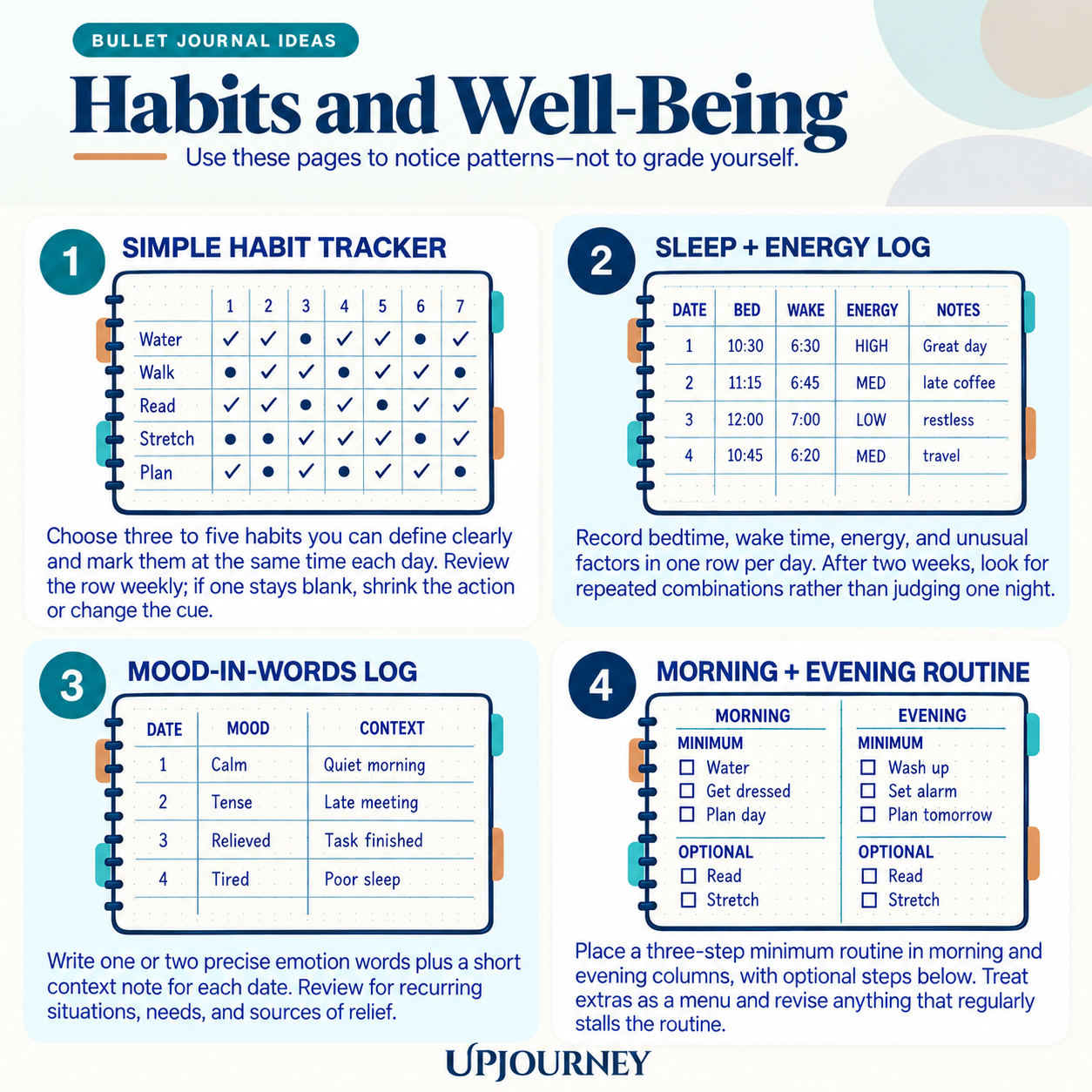
9. Simple habit tracker
- How it looks: Put dates across the top and limit the left column to three to five behaviors. Use one dot, check, or filled square for each completed habit; skip decorative scales unless they help you read the pattern.
- How to use it: Choose habits you can define clearly, mark them at the same time each day, and review the whole row at the end of the week. If a habit stays blank, adjust the cue or make the action smaller instead of treating the tracker as a scorecard.
10. Sleep and energy log
- How it looks: Give each date one row with columns for bedtime, wake time, and a simple low, medium, or high energy rating. Add a narrow notes column for unusual factors such as travel, illness, late caffeine, or a restless night.
- How to use it: Complete the row in the morning and add the energy rating at a consistent time later in the day. After two weeks, look for repeated combinations rather than judging individual nights.
11. Mood-in-words log
- How it looks: List the dates down the page and leave space for one or two emotion words plus a short context note. This can be a plain list; it does not need a color key or illustrated mood wheel.
- How to use it: Name the feeling as specifically as you can and note what was happening around it. Review for repeated situations, needs, or sources of relief rather than trying to produce an unbroken record of positive moods.
12. Morning and evening routine page
- How it looks: Split one page into morning and evening columns. In each column, write a three-step minimum routine first, then place optional steps underneath for days when you have more time or energy.
- How to use it: Follow the minimum version often enough to make it familiar, and treat the optional list as a menu rather than a requirement. Revise any step that regularly causes the whole routine to stall.
Bullet Journal Ideas for Money and Home
The most useful household pages prevent surprises, reduce repeated decisions, or save you from searching for the same information again.
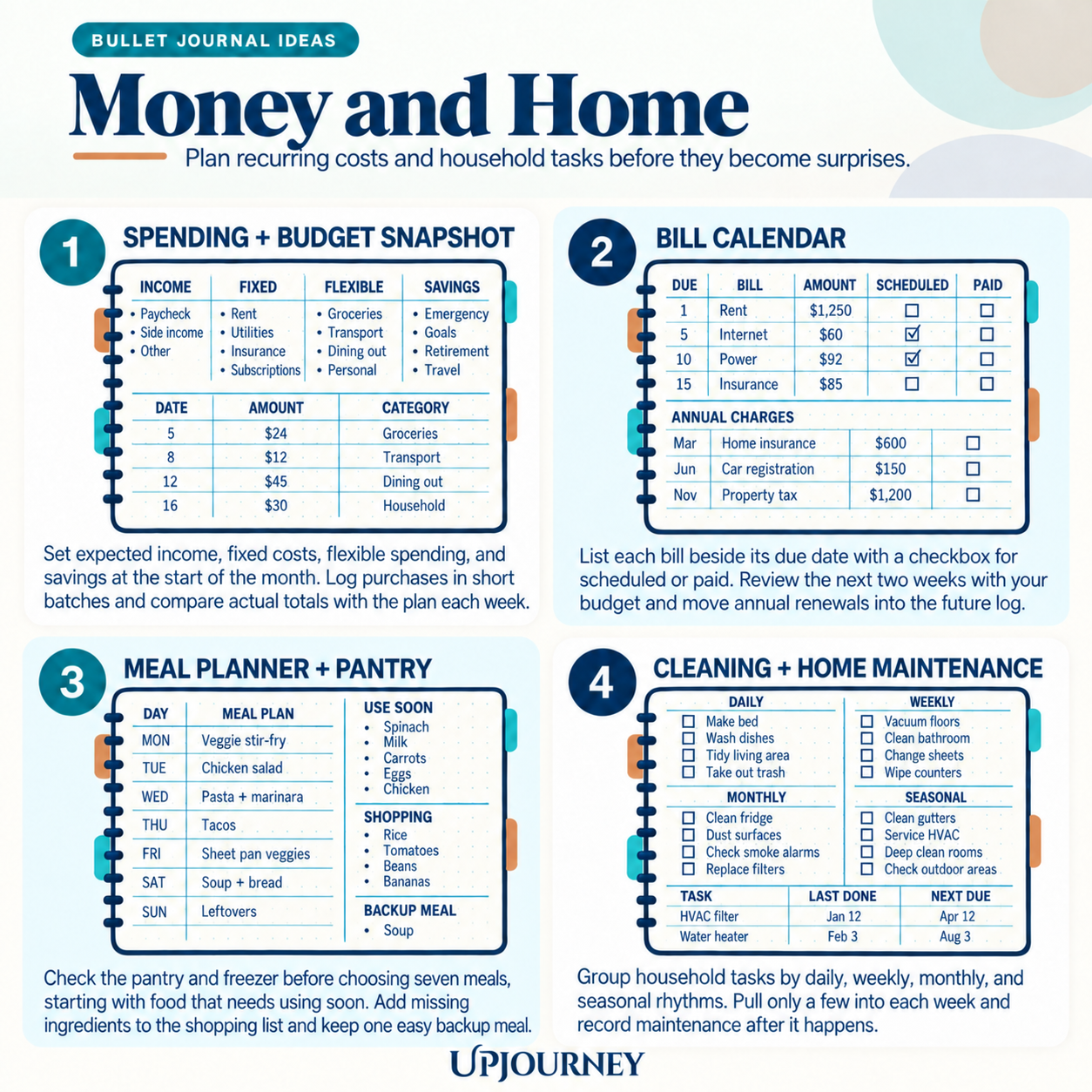
13. Spending and budget snapshot
- How it looks: Use the top half for expected income, fixed expenses, flexible spending, and savings. Use the bottom half for a simple spending log with date, amount, and category columns.
- How to use it: Set the plan at the start of the month, record purchases in short batches, and compare actual totals with the plan once a week. Keep sensitive account numbers and passwords off the page.
14. Bill calendar
- How it looks: Draw a simple monthly calendar or dated list and write each bill name and expected amount beside its due date. Add a small checkbox for paid or scheduled and a separate area for irregular annual charges.
- How to use it: Review the next two weeks whenever you check your budget, and mark a bill only after payment is scheduled or confirmed. Move annual renewals into the future log so they do not disappear between months.
15. Meal planner and pantry check
- How it looks: Divide a spread into a seven-day meal plan, a short list of ingredients to use soon, and a shopping list. Leave one line for an easy backup meal so a disrupted plan does not become a last-minute decision.
- How to use it: Check the pantry and freezer before choosing meals, plan around the most perishable food first, and add missing ingredients directly to the shopping section. Repeat dependable meals instead of designing a completely new menu every week.
16. Cleaning and home maintenance rhythm
- How it looks: Create four sections for daily, weekly, monthly, and seasonal tasks. Beside infrequent jobs, add the last completed date and the next time they need attention.
- How to use it: Pull only a few relevant tasks into each week and record maintenance after it happens. Use the page as a reference rhythm, not as a promise that every chore must be completed on an ideal schedule.
Bullet Journal Ideas for Work and School
These layouts collect the details that tend to get scattered between a calendar, inbox, learning platform, meeting notes, and memory.
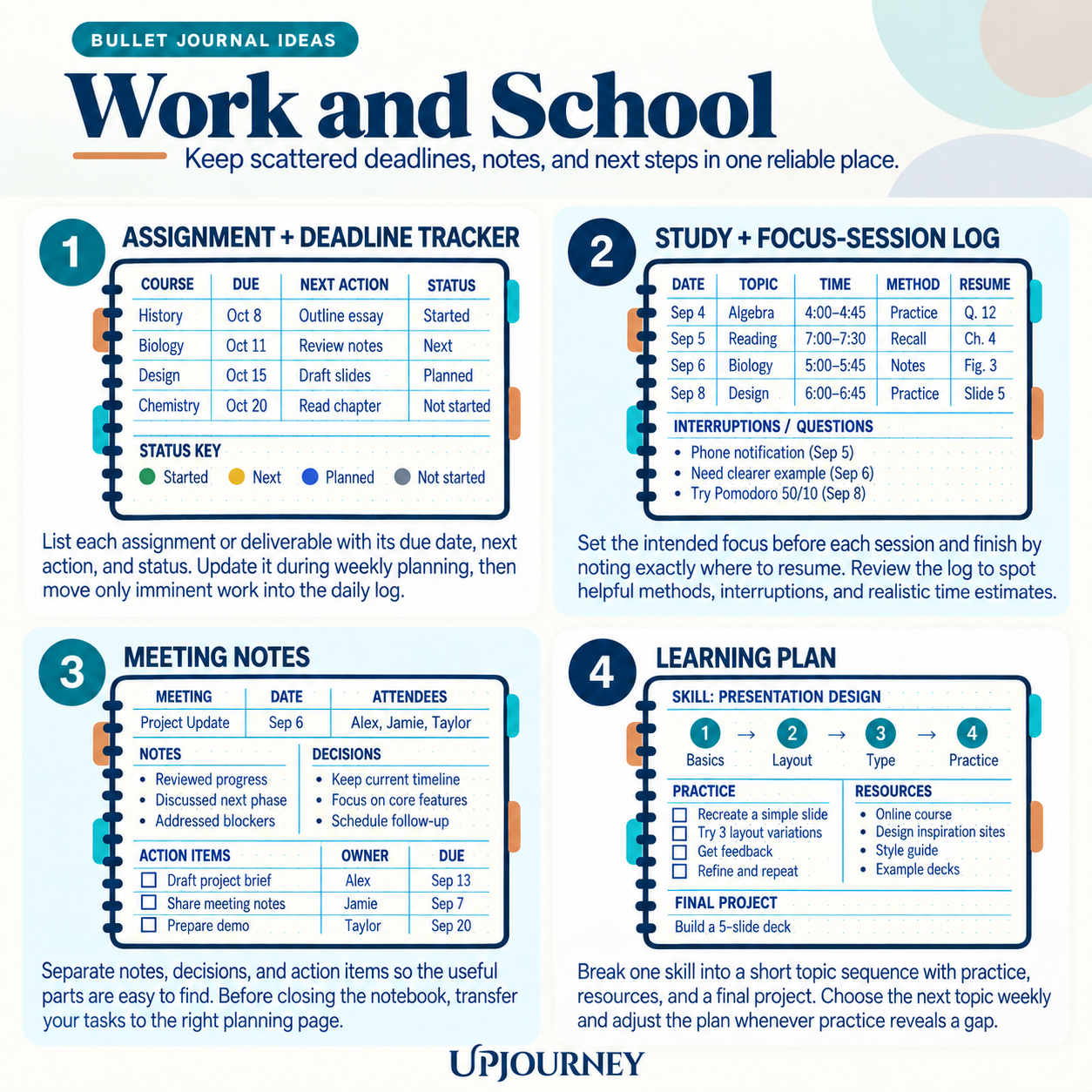
17. Assignment and deadline tracker
- How it looks: Make one row per assignment or deliverable with columns for the course or project, due date, next action, and status. Order rows by due date or group them by subject, whichever makes upcoming work easier to see.
- How to use it: Break every large item into a visible next action, update the status during weekly planning, and move imminent work onto your daily log. The tracker shows the whole workload; it should not become a second daily task list.
18. Study or focus-session log
- How it looks: Use rows for the date, topic or task, start and stop time, method used, and where to resume. A final narrow column can hold interruptions or a question you still need to answer.
- How to use it: Set the intended focus before starting and complete the resume note before stopping. Review the log to learn which study methods help, when concentration tends to break, and how long common tasks actually take.
19. Meeting notes
- How it looks: Put the meeting title, date, and attendees at the top, then divide the page into notes, decisions, and action items. Give action items their own checkboxes and include an owner or due date when someone else is involved.
- How to use it: Capture only the details you will need later, then review the decisions and actions before closing the notebook. Move your tasks into the appropriate planning page and keep the meeting page as context.
20. Learning plan
- How it looks: Write the skill or subject at the top, then break it into a short sequence of topics. Add spaces for practice activities, useful resources, and one project or demonstration that will show what you can do.
- How to use it: Choose the next topic during weekly planning, record brief evidence of practice, and adjust the sequence when you discover a gap. The final project keeps the plan connected to use rather than endless preparation.
Creative Bullet Journal Ideas for Hobbies and Interests
A good hobby page makes it easier to begin, remember what inspired you, or continue from where you stopped. It should support the activity rather than become the activity.
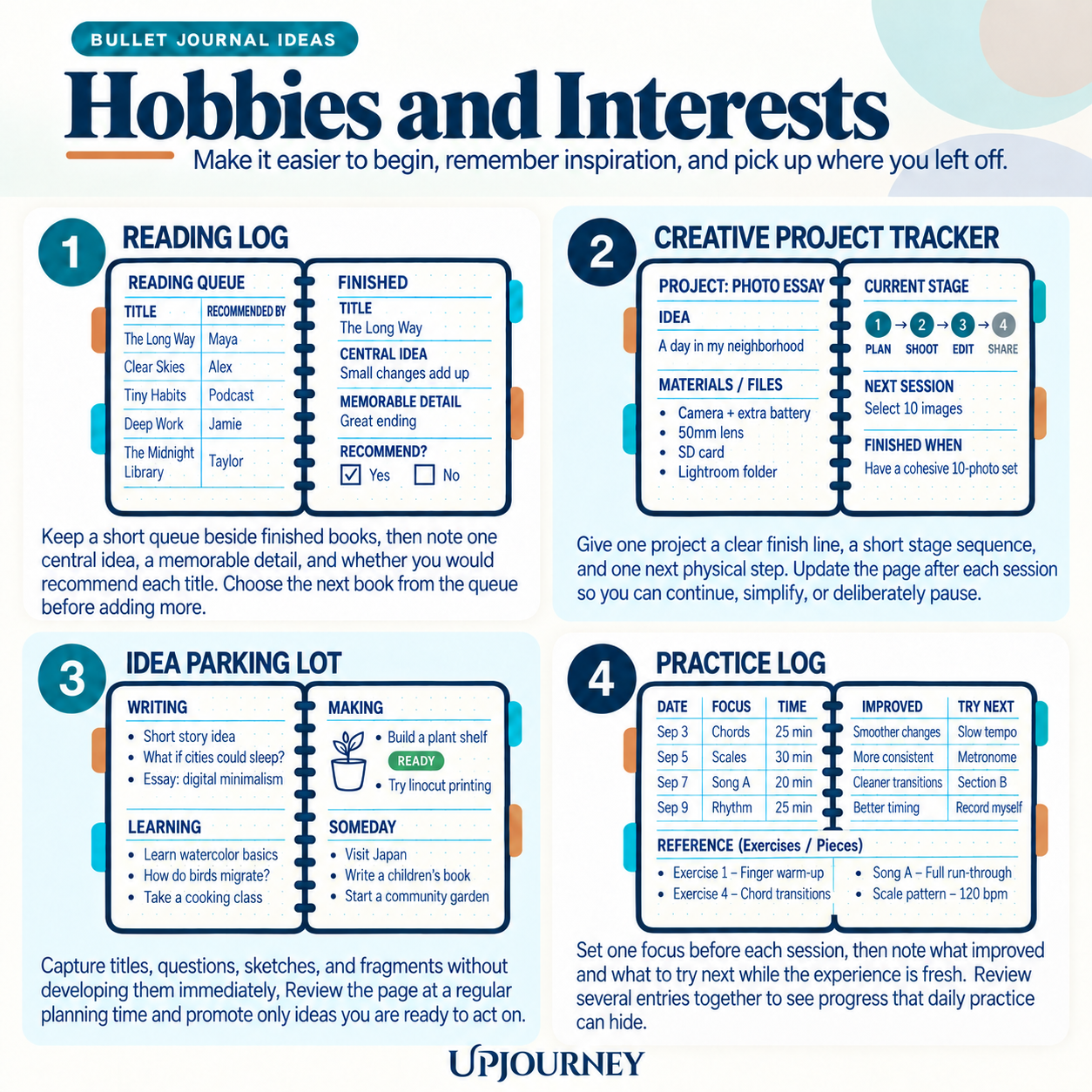
21. Reading log
- How it looks: Keep a short reading queue on one side and finished books on the other. For each finished title, leave room for one central idea, a memorable detail, and whether you would recommend it.
- How to use it: Add books you genuinely want to read, note who recommended them, and choose your next book from the queue before searching for more. Record just enough after finishing to help your future self remember it.
22. Creative project tracker
- How it looks: Give one project a page with sections for the idea, current stage, materials or files, next session, and a clear definition of finished. If the work has several phases, show them as a short sequence rather than a large checklist.
- How to use it: End each session by writing the next physical step, even if it is small. When the project stalls, consult the page to decide whether to continue, simplify the scope, or deliberately set it aside.
23. Idea parking lot
- How it looks: Use a flexible list with a few optional labels, such as writing, making, learning, or someday. Leave room for titles, questions, sketches, phrases, and fragments without forcing every idea into a detailed template.
- How to use it: Capture ideas quickly, then review the page at a regular creative-planning time. Promote only the ideas you are ready to act on and let the rest remain possibilities without becoming obligations.
24. Practice log
- How it looks: Give each session a row for what you practiced, how long you worked, what improved, and what to try next. For skills with exercises or pieces, include a small reference column so you can see what you repeat.
- How to use it: Set one focus before beginning and write the next experiment while the session is still fresh. Review several entries together to spot progress that is hard to notice day by day.
Bullet Journal Ideas for Memories and Reflection
You do not need full diary entries to leave a meaningful record. Small, specific notes often bring a season back more clearly than a polished summary.
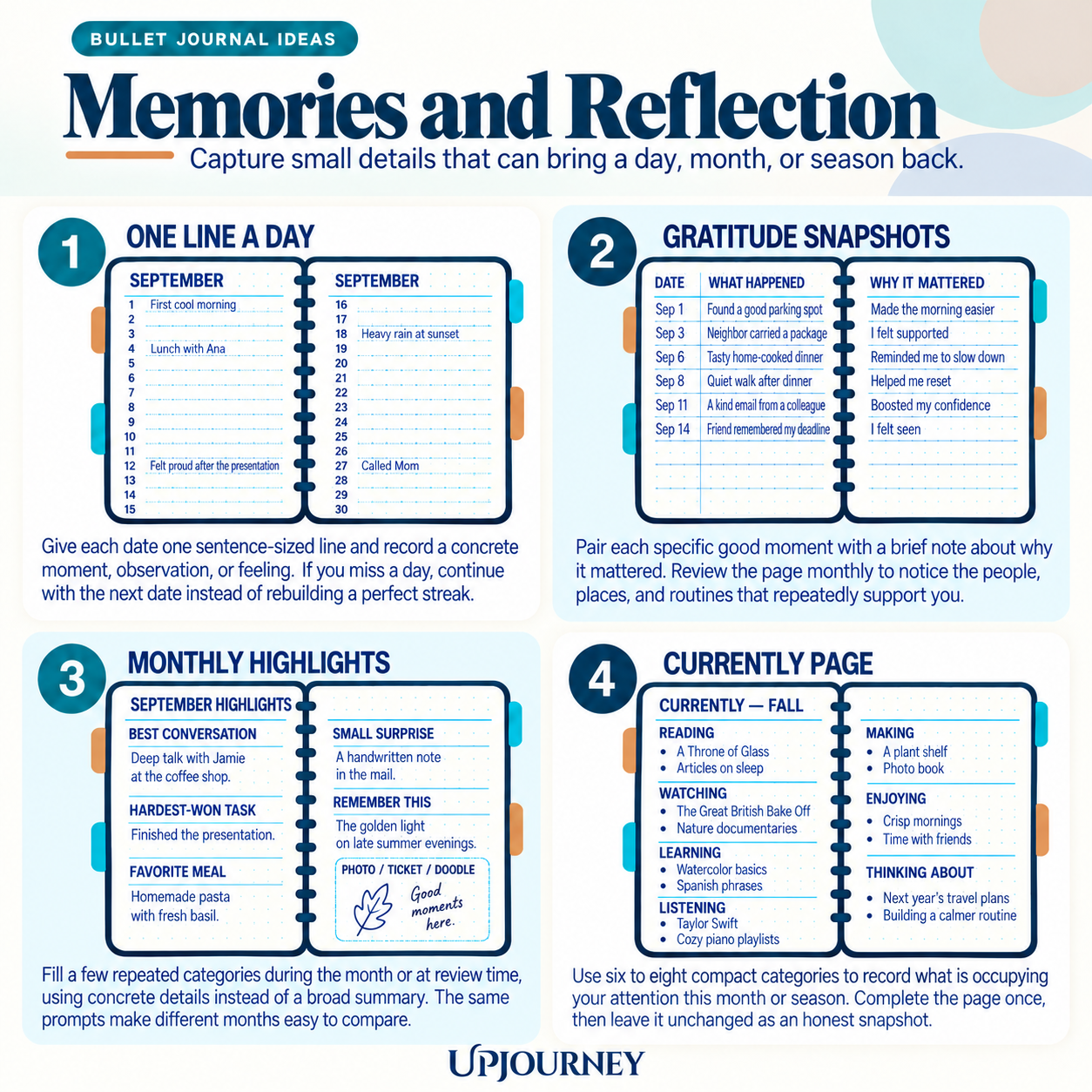
25. One line a day
- How it looks: Fit a month onto one or two pages with one numbered line for each date. Leave enough room for a complete sentence, but not so much that writing feels like a nightly assignment.
- How to use it: Record one concrete moment, observation, or feeling from the day. If you miss a date, continue with the next one rather than reconstructing a perfect streak.
26. Gratitude snapshots
- How it looks: Use a running list with the date and two short prompts: what happened and why it mattered. The second prompt keeps the entries from becoming the same repeated nouns.
- How to use it: Write about specific help, comfort, beauty, effort, or ordinary good moments. Revisit the page at the end of the month to notice which people, places, and routines consistently support you.
27. Monthly highlights
- How it looks: Divide a page into a handful of prompts such as best conversation, hardest-won task, favorite meal, small surprise, and something you want to remember. Add a tiny space for a photo, ticket, or doodle only if you enjoy using it.
- How to use it: Fill the sections gradually or during your monthly review, using concrete details rather than a broad summary. The repeated categories make different months easy to compare.
28. Currently page
- How it looks: Arrange six to eight short categories around the page, such as reading, watching, learning, making, listening, enjoying, and thinking about. Keep each section small enough for a few phrases.
- How to use it: Complete the page once a month or season, then leave it alone as a snapshot. Over time, the changing answers create a useful record without requiring daily reflection.
Bullet Journal Ideas for Travel, Events, and Seasons
Temporary collections are one of the bullet journal’s strengths. Use a few pages for a trip, celebration, or season, index them, and return to ordinary logging when it is over.
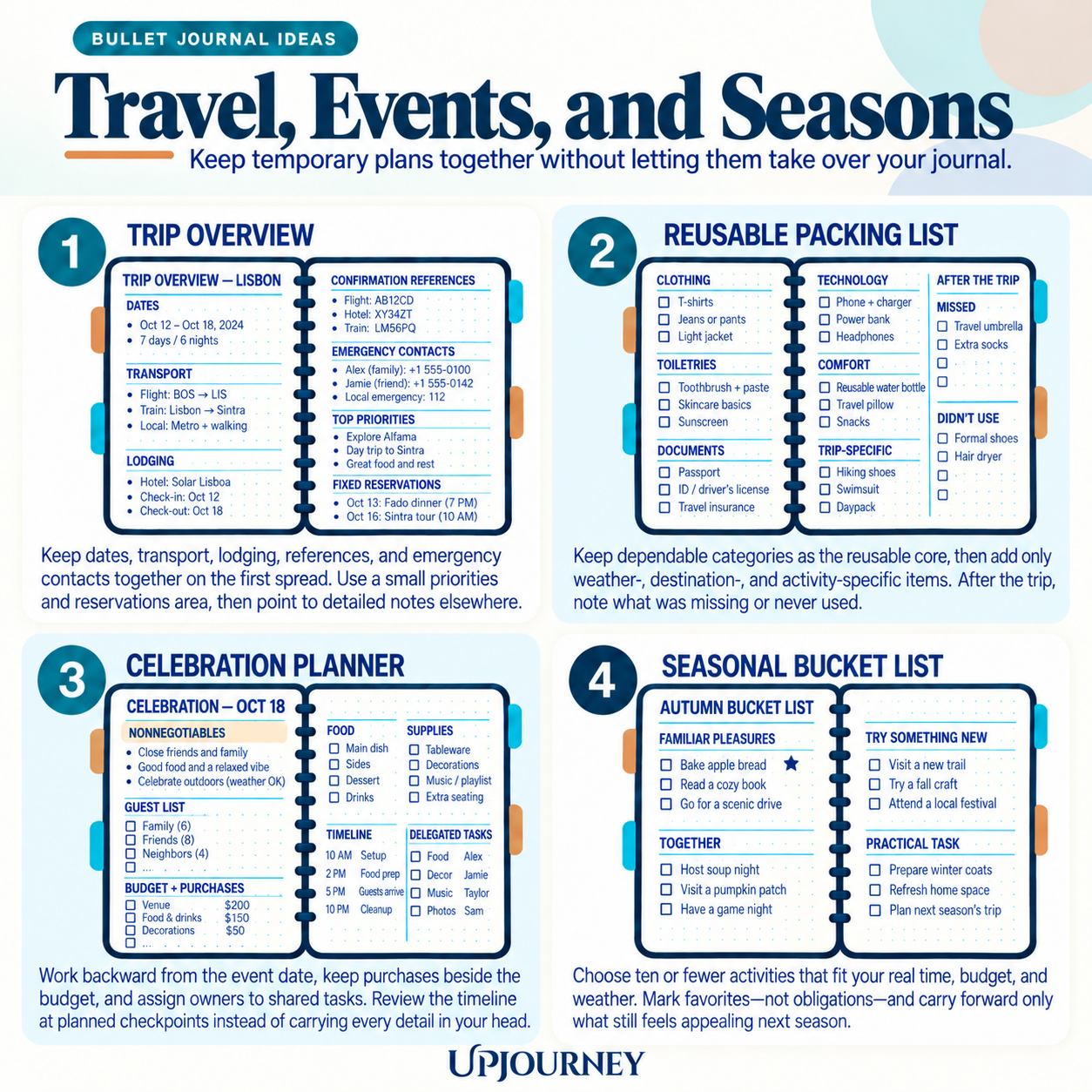
29. Trip overview
- How it looks: Place dates, transport, lodging, confirmation references, and emergency contacts in compact sections on one spread. Add a small area for the trip’s top priorities and fixed reservations rather than building an hour-by-hour itinerary.
- How to use it: Keep the overview as the first page of the trip collection and point to detailed notes elsewhere when needed. Check it before booking, packing, and each travel day so the essential information stays easy to find.
30. Reusable packing list
- How it looks: Divide the page into reliable categories such as clothing, toiletries, documents, technology, and comfort items. Leave a separate blank area for weather, destination, and activity-specific additions.
- How to use it: Copy or reference the core list for each trip, then add only what makes that trip different. After returning, note anything you missed or carried without using so the next version improves.
31. Celebration planner
- How it looks: Create sections for the guest list, budget, food, supplies, timeline, and delegated tasks. Put the date and the few nonnegotiable details at the top so decisions stay connected to the event you actually want.
- How to use it: Work backward from the celebration date, assign owners to shared tasks, and keep purchases beside the budget rather than on a separate list. Review the timeline at planned checkpoints instead of carrying the whole event in your head.
32. Seasonal bucket list
- How it looks: Keep the list deliberately short, with separate spaces for familiar pleasures, one new experience, time with other people, and one practical seasonal task. Ten or fewer items usually leave room for spontaneity.
- How to use it: Choose activities that fit your actual time, budget, and weather, then mark favorites rather than treating every item as a requirement. At the end of the season, carry forward only what still feels appealing.
Frequently Asked Questions
What should a beginner put in a bullet journal?
Begin with an index, a future log, a monthly overview, and daily rapid logs. Add one collection for a current need, such as a meal plan, a project roadmap, a reading log, or a simple habit tracker. You can build the rest only when a recurring problem gives you a reason.
Do I need a dotted notebook or special pens?
No. A blank, lined, grid, or dotted notebook can all work, and one pen is enough. Dots make it easier to draw guides and tables, but the method depends on how you capture and review information, not on supplies.
Does a bullet journal have to be artistic?
No. Color, lettering, stickers, and drawings can make the practice enjoyable, but they are optional. A plain page with a date and a short list is still a complete bullet journal page.
What should I do with a spread I stopped using?
Leave it where it is and turn to the next blank page. You can note why it failed, reuse the idea in a simpler form, or drop it entirely. The index lets useful collections continue on later pages without forcing you to reserve space in advance.