A journal does not care how many days you missed. It simply opens to the next blank page. So really, how often should you journal? If you are starting out, try five minutes three times a week—often enough to build familiarity but light enough to fit into real life.
Daily entries are useful for capturing moods, habits, and small details as they change. Weekly writing leaves more room for perspective, while as-needed journaling works when something specific deserves your attention.
There is no research-backed schedule everyone must follow. A journal is a tool, not an attendance sheet, and at the end of the day, one honest sentence still counts.
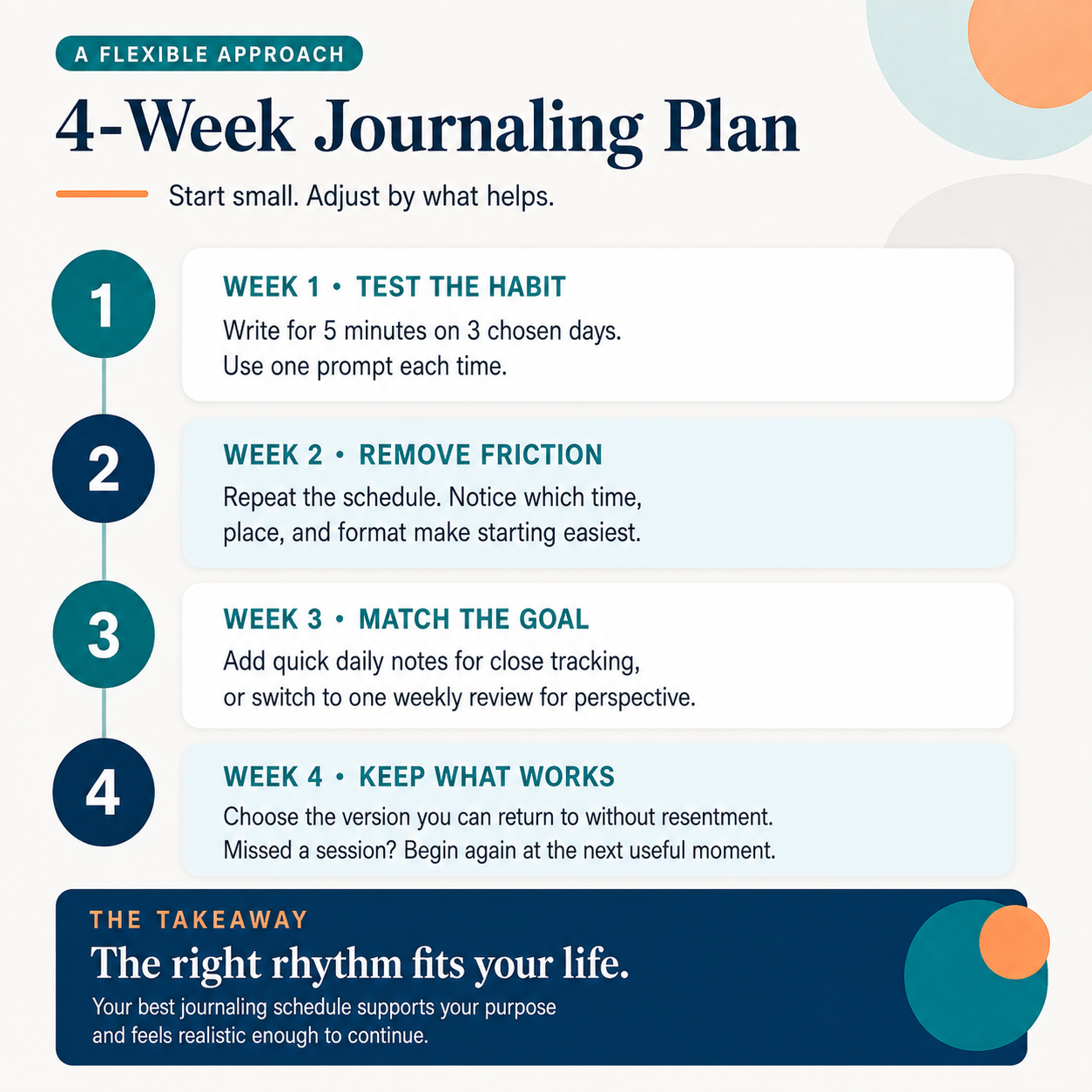
Start With Three 5-Minute Sessions a Week
For a low-pressure trial, choose three days in the coming week and set a five-minute timer. Leave a day between sessions when you can. That space gives you something to reflect on and keeps the first week from feeling crowded.
Pick one prompt each time:
- What feels most present for me today?
- What happened that I do not want to forget?
- What am I needing more or less of right now?
- What choice is taking up my attention?
- What can I leave unfinished for today?
Stop when the timer rings unless continuing feels useful. After two weeks, ask whether the entries helped you notice something, remember something, name a need, or make a choice. Keep the schedule if it did. If it did not, change the prompts, shorten the entries, or write less often.
If the routine begins to feel like an obligation, shorten your entries or write less often. The right schedule is one that supports your purpose and still fits comfortably into your life.
Should You Journal Every Day?
Journal every day when you want to capture something that changes from one day to the next. Mood notes, symptom logs, habit tracking, morning plans, and one-line memories suit a daily schedule.
Daily journaling also removes one small decision. The cue can become familiar: after breakfast, before opening your laptop, or when you get into bed.
The drawback is pressure. If one missed day makes the whole routine feel broken, change the target to “most days,” shorten the entry, or aim for three entries a week. You do not need to reconstruct every missed day. Begin with today.
Daily journaling is optional. A short entry you can return to is more useful than a demanding routine you avoid.
Choose the closest feeling and we will pick a prompt for it. This finder stays inside the article.
Private: your choices stay on this device.What would help most?
Is Journaling Once a Week Enough?
Once a week is enough for reviews, perspective checks, goal checks, and longer reflection. Seven days gives events time to settle. You may notice a pattern that was hard to see while you were inside each individual day.
Weekly journaling does lose some detail. If exact words, small moments, or daily changes matter, keep a running note during the week. A date and one sentence may be enough. Use those notes when you write the weekly entry.
Weekly writing can also keep the practice alive during a busy season. A smaller routine is still a routine.
Try This:
How Often Should You Journal for Your Goal?
How often you should journal depends on what you want the journal to help you do. Writing every day can help you capture small changes and details. Writing less often gives you more time to step back and see patterns.
Use the suggestions below as starting points. You can change the frequency or length until the routine feels useful and realistic.
| Goal from Journaling | A Routine You Can Try |
|---|---|
| Track moods, habits, or daily details | Write for one to five minutes every day. If daily writing feels difficult to maintain, write on most days instead. |
| Reflect on patterns or decisions | Write for five to fifteen minutes two or three times a week. Leave some space between entries so you can return with a fresh perspective. |
| Review your goals for the past week | Write for ten to twenty minutes once a week. Keep a short note during the week if you tend to forget important details. |
| Preserve memories and important events | Write soon after an important event, while the details are still clear. Take as much time as you need. You can also add a monthly check-in. |
| Collect ideas or work through a creative problem | Write for two to fifteen minutes whenever an idea appears. Review your journal regularly so useful ideas do not get lost. |
| Keep a general personal journal | Begin with five minutes three times a week. After two weeks, decide whether you want to continue, write more often, or write less often. |
You can also combine routines. For example, write one sentence on most days to capture small details, then spend ten minutes at the end of the week reviewing what stands out.
If the routine begins to feel like an obligation, shorten your entries or write less often. The right schedule is one that supports your purpose and still fits comfortably into your life.
How Can You Tell Whether the Schedule Is Working?
A useful journaling frequency supports your life outside the notebook. Look for signs such as these:
- You can begin without a long argument with yourself.
- You can stop without feeling that every thought must be resolved.
- The entries help you notice patterns, needs, choices, or details worth remembering.
- Missing a session feels neutral rather than shameful.
- The practice fits beside the rest of your day.
Change the schedule when those signs disappear. A routine that helped during a demanding month may feel unnecessary during a quieter one. A weekly journal may need daily notes during travel or a major change. The frequency can move with the job the journal is doing.
If writing becomes repetitive or starts to feel compulsory, shorten the timer, switch topics, or take a break. You do not have to turn every feeling into a lesson or finish every entry.
Frequently Asked Questions
Is It Healthy to Journal Every Day?
Daily journaling can be a useful routine when the entry has a clear purpose and fits your life. It is not required. If writing every day creates pressure or repetition, try “most days,” three times a week, or a brief weekly review.
How Long Should a Beginner Journal?
Five minutes is a practical starting length. It is enough time to write a few honest lines without making the session hard to fit into the day. Stop at five minutes or continue when more writing still feels useful.
What Should You Write in Your First Journal Entry?
Write the date, what brought you to the page, and one thing taking up your attention. You can finish with what you need next. The first entry does not need to explain your whole life or set rules for future entries.
Is It Better to Journal on Paper or Digitally?
Use the format that is easiest to return to and private enough for honest writing. Paper can reduce screen distractions. A phone, computer, or voice note can be searched faster and more easily. The useful format is the one that fits your routine.
Can Journaling Replace Therapy?
No. Journaling can help you organize thoughts, notice patterns, and prepare for a conversation, but it cannot provide assessment, treatment, or a trained outside perspective. It can be used alongside therapy when writing supports the work you are doing.